Start here
You are buying a car.
Collect evidence.
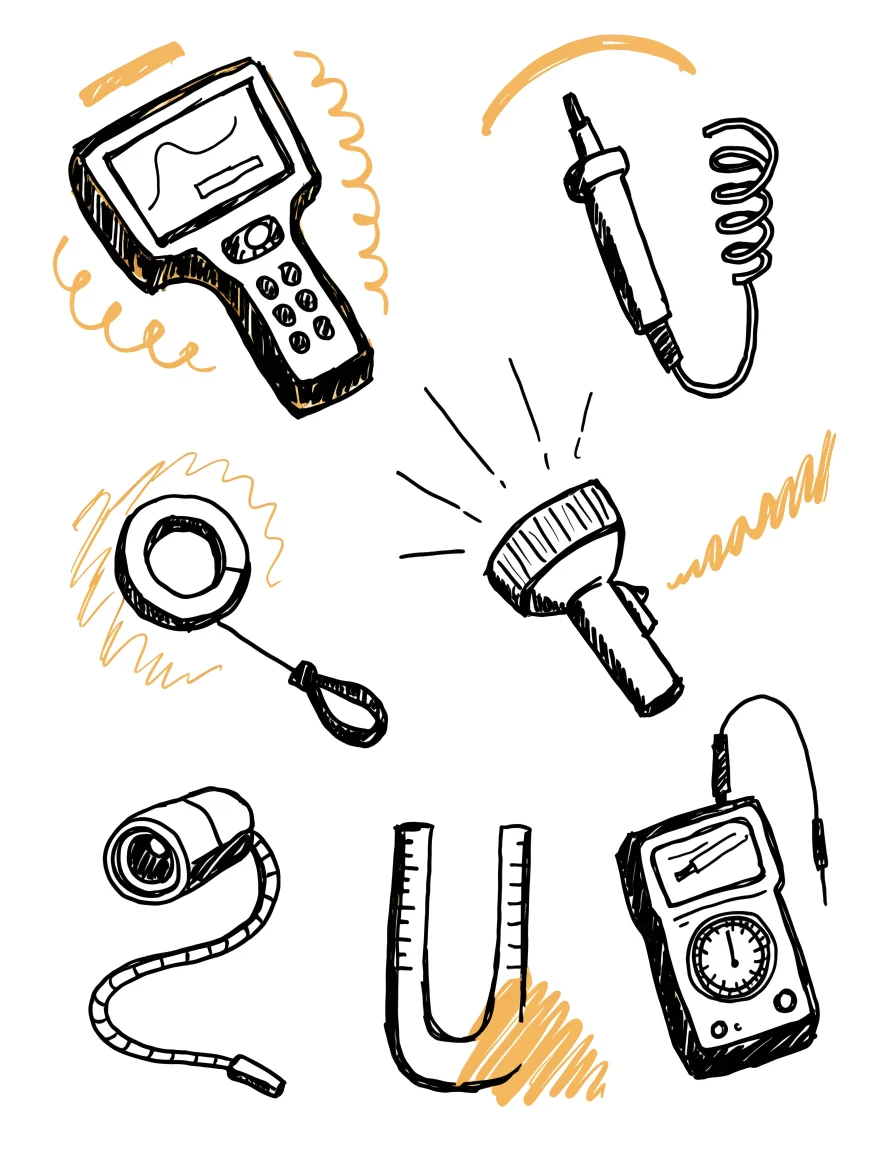
A scanner, a paint gauge and a torch are useful because they give you better questions to ask. None of them can make the buying decision for you.
HK’s videos return to the same sequence: know the local sell price, check the car and its history, budget the work, then present it properly. This guide turns that approach into a practical toolkit. The original physical-tools PDF provides the starting list; the video archive adds sourcing, photography and handover.
01Start with the car.
Choose tools that cover the actual engine, gearbox, body materials and systems you inspect.
02Save what you find.
Keep readings, reports, photos and quoted work together in one dated deal file.
03Know your limit.
Buy qualified inspection time when a tool or your experience cannot answer the question.
Spend on coverage before quantity.For a first viewing, focus on a charged phone, a good light, tyre measurements, document checks and access to a suitable diagnostic and paint inspection. Borrowing equipment or booking a qualified inspection can be more useful than buying specialist tools you cannot yet interpret.
01 · At the car
The viewing kit.
What to check.
What the reading cannot prove.
Expand a tool to see its purpose, the evidence to keep and the point at which to involve a specialist. Select by capability, calibration, coverage and support—not an old price in a video.
Underneath means a properly supported inspection.A mat or head torch can help with an external look. Arrange a professional lift inspection for the underside. Never crawl under a vehicle supported only by a jack, and do not treat a roadside glance as a structural assessment.
02 · Before and after the viewing
The digital desk.
The best record is the one you can find when the seller calls, the workshop quotes and the buyer asks.
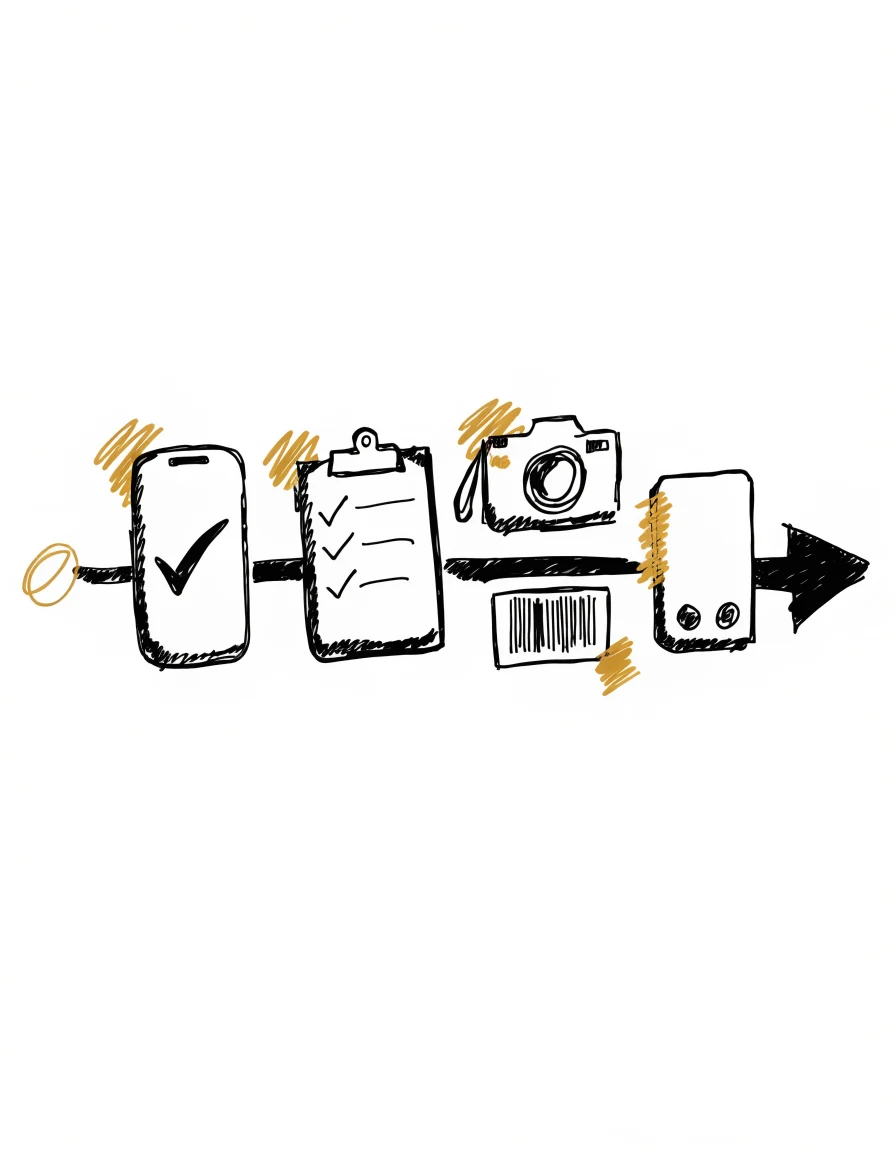
One car. One evidence file.
Use a consistent folder name: date, model and an internal stock ID. Keep original reports and invoices, a comparison sheet, inspection findings, approved work and handover documents together.
Store sensitive documents securely. Hide personal details in public adverts, and obtain permission before sharing someone else’s information.
HK · Paperwork comes first · 05:13 ↗07History reports & document checks
Use VIN-history services such as those HK discusses as one input. Compare them with the car, service invoices, seller identity and the appropriate official ownership, finance or stolen-vehicle checks available in the relevant country. Database coverage is incomplete; no report certifies clean title or an accident-free car.
Keep the dated report, original documents inspected and unresolved mismatches.
A charged phone & power bank
Photograph the same evidence sequence at each viewing: the car, identifiers, odometer, documents with permission, bodywork, tyres and every concern. Record what was not accessible. Charge the scanner and any other battery equipment before leaving.
Keep original files with the date and your observations.
Comparable listings & saved searches
Open local like-for-like cars alongside mobile.de or AutoScout24 where useful. Match the exact version, history, mileage, equipment and seller terms. Use saved searches and alerts to keep the research repeatable. An advert is evidence of an asking price, not a sale.
HK · Saved searches · 00:36 ↗A full-cost deal sheet
A spreadsheet is enough. Track purchase, fees, transport or travel, the verified tax treatment, registration work, preparation, selling costs and finance or holding costs. Separate estimates from quotes and actual payments. Set your maximum offer before negotiating.
Keep a normal case and a delayed-sale case. Check VAT treatment with your accountant rather than copying a video example.
HK · Costing the deal · 10:17 ↗An inspection sheet & document folder
Use explicit statuses: checked, not checked and needs investigation. Before a pickup, confirm authorisation, signatures, documents, lawful transport and the destination requirements. At handover, organise the agreed work, invoices, keys and vehicle documents.
HK · Pickup paperwork · 08:49 ↗
03 · From purchase to presentation
Prepare the car.
Then photograph it.
HK’s most repeatable advice is simple: do the work before the photos. Better presentation is a process, not permission to hide a problem.
12A basic wash & interior kit
Use suitable cleaning products, clean mitts and towels, a vacuum, glass cleaner and soft brushes. Follow product instructions, test on a small area and keep wheel-cleaning materials separate. Diagnose persistent odours and water ingress instead of covering them with fragrance.
Outsource when the contamination, materials or time required exceed your equipment and skill.
A written preparation job sheet
Fix safety and mechanical issues before cosmetic extras. Agree scope, price and records with your workshop or detailer. Keep service evidence and describe remaining defects honestly. Wheels, tint and other modifications need suitability and any required local approval checked before fitting.
HK · Preparing the car · 07:22 ↗Paint correction—only with the skill
A dual-action polisher, appropriate pads and compounds are optional workshop tools. Learn on suitable practice material or use a trained detailer. Paint condition and product instructions govern the process; do not apply one pressure, speed or cutting recipe to every finish.
Keep the agreed cosmetic work and the defects that remain. Polishing cannot correct a poor structural repair.
HK · Learning paint preparation · 12:31 ↗A phone-photo setup
A clean lens, a calm background and controlled light matter before expensive camera equipment. Small LED panels can help when used well. Photograph exterior, interior, useful equipment, records without private data and known defects in a consistent order. Check the images before leaving the location.
Edit for clarity with exposure and colour corrections that represent the car accurately. Do not erase scratches, warnings or defects.
HK · Phone-photo setup · 03:57 ↗A suitable jump starter & inflator
Choose equipment compatible with the vehicle and keep it maintained. Follow the vehicle and equipment instructions at the specified connection points. A car that needs a boost or repeated tyre inflation still needs the cause investigated; do not normalise the symptom or hide it from a buyer.
HK · Reliable support equipment · 09:09 ↗ A professional handover is mostly organisation.Clean the car again if needed. Put the documents and agreed work in order. Explain the equipment, supply the keys and record what was handed over. The branded folder is the finishing touch; the clear record is the useful part.
HK · Handover details · 05:12 ↗
04 · Use the kit in order
A viewing that ends
with a decision.
- 01
Before leaving
Know the local buyer, compare the specification and get the seller’s permission for the checks. Ask for a cold start. Confirm the documents and inspection arrangements before committing travel time.
- 02
At the car
Match identity and paperwork. Record body, tyre and visible-condition observations. Save the diagnostic report. Mark anything inaccessible or outside your competence as not checked.
- 03
Before an offer
Arrange the professional work needed to resolve your questions. Add full repair quotes, preparation and route costs to the deal sheet. Do not let a discount replace an answer about title, safety or an unknown fault.
- 04
At delivery
Check the car against the recorded condition in good light. Photograph new damage and record it accurately through the carrier’s process. Reconcile the documents and promised items before closing the file.
Explore the full inspection course plan ↗
Your next viewing
Pack your kit.
0 of 10 ready
Tick when each item or booking is ready. This is a packing list, not a completed vehicle inspection.
The evidence behind the guide
Trace it back.
This guide combines the original Car Dealer’s Toolkit PDF with HK Insight’s timestamped teaching material and editorial checks. Video examples explain a method; they do not establish current tool prices, legal rules or typical results.
What changed from the original PDF +
The new edition removes fixed brand-and-price shopping claims, a universal factory-paint range, the claim that incomplete monitors prove deliberate fault clearing, and broad UV or battery-voltage diagnoses. A magnet or a tidy panel reading cannot establish repair quality.
The digital, photo and handover sections now sit alongside physical tools. Inspection tools are distinguished from optional specialist equipment, and each reading has a limit. Manufacturer procedures and professional investigation take priority over shortcuts in older material.
- HK · How I Evaluate Cars in 5 Minutes01 Oct 2025 · 00:45–07:31 ↗
Bodywork, history, visible leaks and paperwork. An initial screen, not a full inspection.
- HK · How to Flip Cars for Profit | FULL PROCESS16 Mar 2025 · 00:36 / 05:12 / 09:09 ↗
Saved searches, presentation and support equipment.
- HK · How to Flip Used Cars in 1 week24 Jan 2025 · 03:57–06:51 ↗
Phone photography, light and useful equipment details.
- HK · How to sell cars as a beginner in 202523 Jun 2025 · 07:22–10:19 ↗
Preparing the car and supporting a listing with history evidence.
- HK · Bought a VW on Auction and travelled the whole EU06 May 2025 · 08:49 ↗
Pickup paperwork and planning.
- HK · How To Flip Cars | FULL PROCESS #231 Mar 2025 · 12:31 ↗
Learning preparation and paintwork, with limits added in this edition.
- DeFelsko · Automotive Paint Inspection—Paint MetersTechnical reference ↗
Gauge capabilities, substrates and comparative measurements. The manufacturer’s technical explanation is not an endorsement of a specific purchase.
- Texas DPS · Ready or NotTechnical reference · 04 Sep 2020 ↗
What readiness means and how it can reset. Its US inspection acceptance rules are not applied to European cars here.
Additional references: Physical_Tools_Checklist.pdf; HK’s studio transcript “10 mistakes car dealers make”, 25 September 2026, 06:23–08:10. Illustrations reused from the supplied toolkit PDF. Source review: 31 October 2026. No current product prices or affiliate recommendations.